Solar Smart
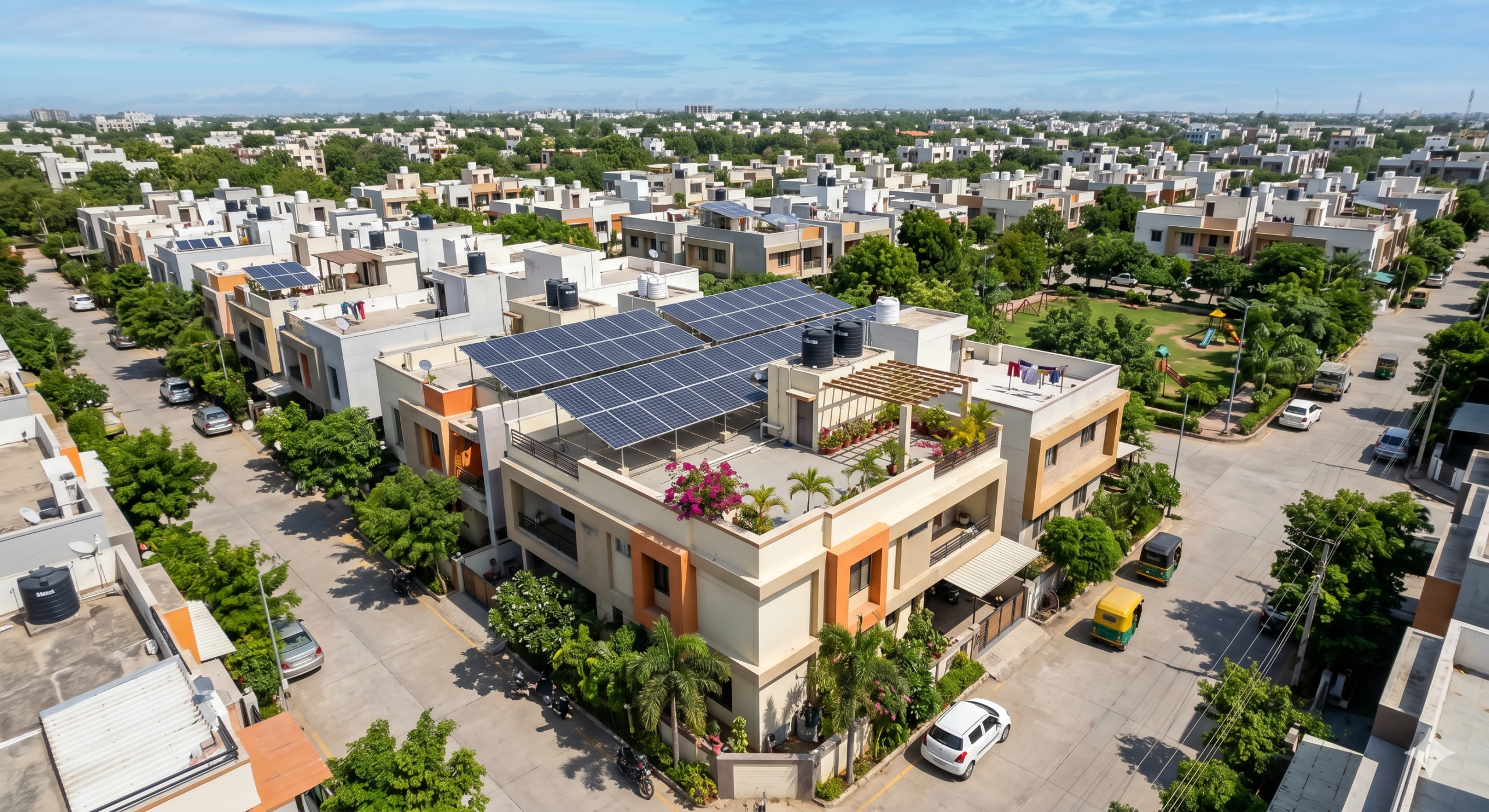
How much can I save with solar? It is one of the most common questions homeowners ask before installing rooftop solar panels.
The answer depends on your electricity bill, solar system size, rooftop conditions, and electricity consumption pattern. However, many homeowners can reduce a significant portion of their monthly electricity expenses by switching to solar energy.
For households in Gujarat and Maharashtra, rooftop solar has become one of the most effective ways to control rising electricity costs while benefiting from government subsidy schemes and long-term energy savings.
In this guide, you’ll learn how solar savings are calculated, what affects your savings, and how to estimate the right solar system for your home.
How Much Can I Save With Solar?
Most homeowners can save anywhere between ₹1,500 and ₹5,000+ per month depending on their electricity bill, rooftop conditions, solar system size, and local electricity tariff.
Generally speaking, higher electricity consumption creates greater savings opportunities because the solar system can offset more grid electricity.
To help you understand potential savings, here is a practical estimate based on typical residential electricity bills.
Estimated Solar Savings Based on Your Electricity Bill
| Monthly Electricity Bill | Recommended Solar System | Estimated Monthly Savings |
|---|---|---|
| ₹2,000 – ₹3,000 | 3kW | ₹1,500* – ₹2,500* |
| ₹3,000 – ₹6,000 | 5kW | ₹2,500* – ₹4,500* |
| ₹6,000+ | 10kW | ₹5,000+* |
These figures are estimates and may vary based on sunlight availability, roof orientation, electricity usage patterns, and applicable net metering regulations.
Real Solar Savings Example
Let’s look at a practical example to understand how rooftop solar can reduce electricity bills.
Suppose a homeowner in Ahmedabad receives an average electricity bill of ₹5,000 per month and installs a professionally designed 5kW rooftop solar system.
| Parameter | Value |
|---|---|
| Monthly Electricity Bill | ₹5,000 |
| Recommended Solar System | 5kW |
| Estimated Monthly Savings | ₹3,500 – ₹4,500 |
| Estimated Annual Savings | ₹42,000* – ₹54,000* |
Although actual results vary from one home to another, this example demonstrates how rooftop solar can significantly reduce long-term electricity expenses.
Want to Know How Much Your Home Can Save?
Share your latest electricity bill with Solar Smart and get a free solar savings estimate based on your actual electricity consumption.
Why More Homeowners Are Choosing Solar
Electricity consumption in Indian homes continues to increase every year. Air conditioners, refrigerators, washing machines, water pumps, geysers, and electric vehicles have become common household necessities.
Consequently, electricity bills have also increased for many families. Rather than depending entirely on grid electricity, homeowners are now exploring solar energy as a long-term solution.
By generating electricity directly from sunlight, rooftop solar helps reduce dependence on conventional power sources while creating long-term savings.
Additionally, solar systems allow homeowners to make productive use of unused rooftop space.
Several factors have contributed to the growing popularity of rooftop solar:
- Rising electricity tariffs
- Government subsidy support
- Long-term bill reduction
- Improved solar panel technology
- Growing awareness of renewable energy
- Easy financing and EMI options
Because of these benefits, rooftop solar is increasingly viewed as a financial investment rather than simply an electrical upgrade.
What Determines How Much Can I Save With Solar?
Although solar savings vary from one home to another, several key factors determine how much you can save with solar.
For example, two homes may install systems of the same capacity yet achieve different savings because their electricity consumption, roof conditions, and sunlight exposure are different.
Therefore, understanding these factors is essential before estimating solar savings.
Before estimating solar savings, it is important to understand the factors that influence solar system performance. Electricity consumption, rooftop conditions, sunlight availability, energy usage patterns, and installation quality all play a significant role in determining how much you can save with solar. The infographic below summarizes the key factors that affect rooftop solar savings.
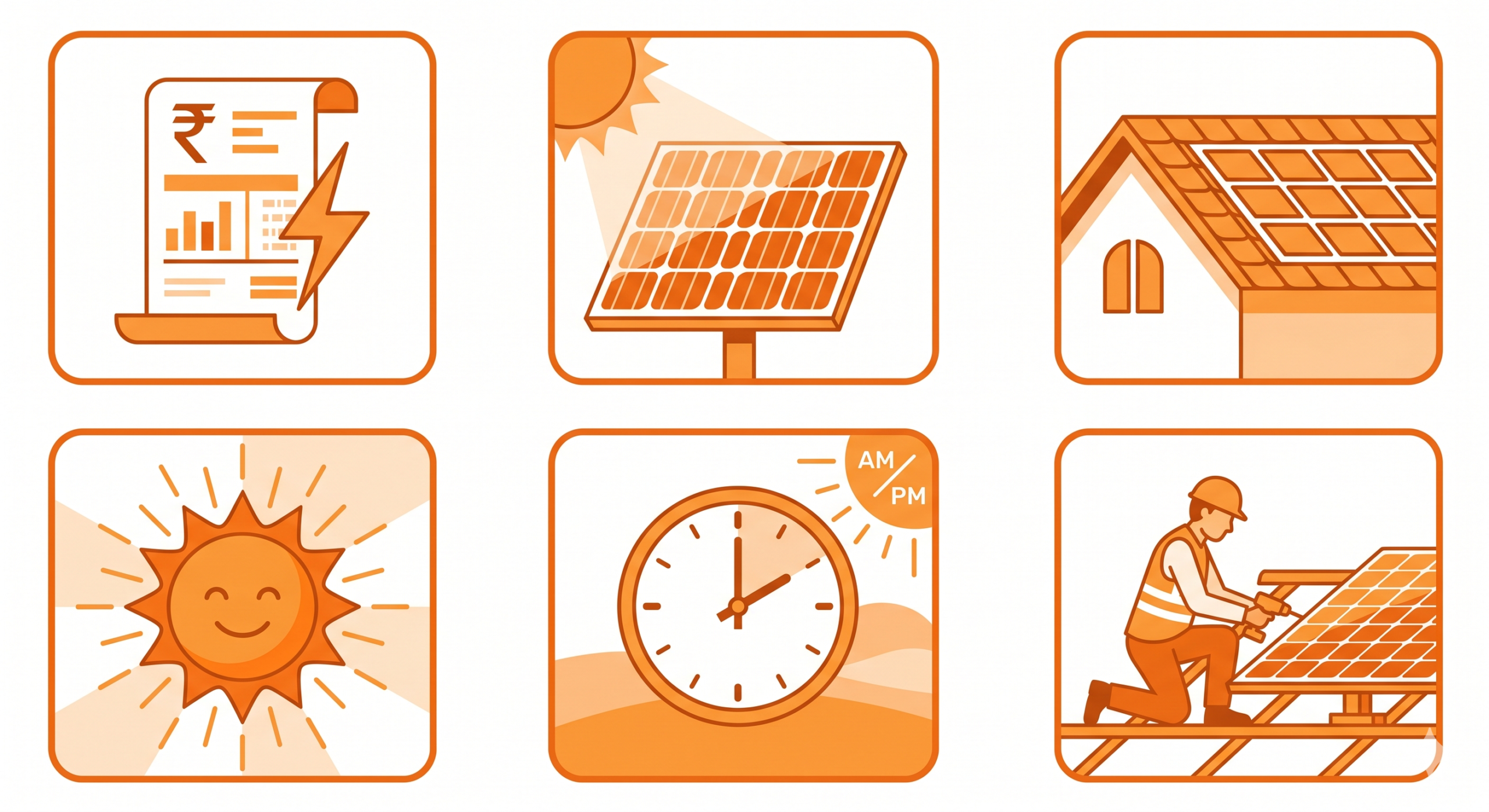
While every home is different, these six factors have the biggest impact on solar generation and electricity bill reduction. Understanding them can help homeowners choose the right system size and maximize long-term savings from rooftop solar.
1. Monthly Electricity Bill
Your electricity bill is one of the strongest indicators of potential solar savings.
Generally speaking, households with higher electricity bills have more room for savings because they consume more grid electricity.
For instance, a homeowner spending ₹5,000 per month on electricity typically has greater savings potential than someone spending ₹1,000 per month.
Moreover, larger electricity bills often justify larger solar systems, allowing more electricity to be generated from the rooftop.
2. Solar System Size
System size directly affects electricity generation.
Larger solar systems can generate more power, but they also require additional rooftop space and a higher upfront investment.
Common residential solar system sizes include:
- 3kW Solar System – Suitable for smaller homes with moderate electricity consumption.
- 5kW Solar System – Popular among families using multiple appliances and air conditioners.
- 10kW Solar System – Suitable for villas, bungalows, and large homes with higher energy demand.
However, selecting the correct system size is important because an undersized system may not deliver expected savings.
3. Available Rooftop Space
The amount of usable rooftop area determines how many solar panels can be installed.
A shadow-free rooftop generally produces better results than a roof with multiple obstructions.
Common rooftop obstacles include:
- Water tanks
- Lift rooms
- Nearby buildings
- Trees
- Parapet walls
- Dish antennas
For this reason, a professional rooftop assessment should always be conducted before installation.
4. Sunlight Availability
Solar panels require sunlight, not heat.
Fortunately, Gujarat and Maharashtra receive strong sunlight for most of the year, making rooftop solar highly effective in these states.
Although generation may decrease during cloudy or rainy days, annual production remains the most important measure of solar performance.
If you’d like to understand seasonal performance in more detail, you may also read: Does Solar Work During Monsoon?
5. Electricity Usage Pattern
The timing of electricity consumption can influence solar savings.
Homes that consume more electricity during daylight hours can directly utilize a larger portion of the electricity generated by the solar system.
However, homeowners with higher evening consumption can still benefit through applicable net metering arrangements.
6. Installation Quality
While solar panels and inverters receive significant attention, installation quality is equally important.
Poor workmanship can reduce generation, increase maintenance requirements, and create long-term reliability issues.
For example, incorrect panel placement, poor cable management, weak structures, and shading issues can affect system performance.
Therefore, selecting an experienced solar installation company is just as important as selecting quality equipment.
Why Homeowners Trust Solar Smart
✔ 7000+ Happy Customers
✔ 4.8 Google Rating
✔ PM Surya Ghar Registered Vendor
✔ Presence Across Gujarat & Maharashtra
How Much Can I Save With Solar Based on System Size?
One of the most common follow-up questions homeowners ask is whether a larger solar system automatically means higher savings.
While bigger systems can generate more electricity, the ideal system size depends on your monthly electricity consumption, rooftop space, and future energy requirements.
The table below provides a general overview of typical generation potential for common residential solar system sizes.
| Solar System Size | Typical Monthly Generation* | Suitable For |
|---|---|---|
| 3kW | 300–450 Units | Small homes with moderate electricity consumption |
| 5kW | 500–750 Units | Family homes with multiple appliances and AC usage |
| 10kW | 1000–1500 Units | Large homes, villas, and bungalows |
*Generation estimates vary based on location, sunlight availability, weather conditions, roof orientation, and system design.
If you are wondering how much can I save with solar, selecting the right system size is one of the most important decisions because it directly affects electricity generation and long-term savings.
How Much Can I Save With Solar After Subsidy?
Government subsidy can significantly improve the economics of rooftop solar for eligible residential consumers.
Under the PM Surya Ghar: Muft Bijli Yojana, eligible homeowners can receive financial assistance for rooftop solar installations, reducing the effective project cost.
As a result, homeowners may recover their investment faster while improving overall returns from solar energy.
Current subsidy guidelines, eligibility criteria, and documentation requirements can be verified through official government resources:
Additionally, Solar Smart assists eligible residential customers with subsidy guidance, documentation support, and project coordination.
How Long Does It Take To Recover Your Solar Investment?
Another important question homeowners ask is how quickly rooftop solar pays for itself.
For many homeowners in Gujarat and Maharashtra, a properly designed rooftop solar system can recover its investment in approximately 4 to 7 years.
The actual payback period depends on several factors, including electricity consumption, system size, subsidy benefits, electricity tariff, and solar generation.
Generally speaking, homes with higher electricity bills achieve faster payback because they offset more grid electricity every month.
After the payback period is completed, the electricity generated by the system effectively becomes long-term savings for the remaining life of the solar plant.
Since modern solar panels are designed to operate for 25+ years, homeowners can continue benefiting from solar energy long after the initial investment has been recovered.
Can Solar Completely Remove Your Electricity Bill?
Rooftop solar can significantly reduce electricity expenses, but whether it can completely eliminate your electricity bill depends on several factors.
These factors include your electricity consumption, solar system size, net metering regulations, DISCOM billing structure, fixed charges, and applicable utility policies.
In many situations, homeowners may still receive a small electricity bill because certain fixed charges and regulatory charges continue even after solar installation.
However, the energy consumption portion of the bill can often reduce substantially when the system is sized correctly.
Therefore, the more practical question is not whether solar will make every bill zero, but rather how much solar can reduce your monthly electricity expenses.
How Much Can I Save With Solar in Gujarat and Maharashtra?
Solar Smart serves homeowners across Gujarat and Maharashtra, two of India’s fastest-growing rooftop solar markets.
Although the principle of solar savings remains the same, local electricity tariffs, sunlight conditions, and rooftop characteristics can influence actual results.
Solar Savings in Gujarat
Gujarat continues to be one of India’s leading states for rooftop solar adoption.
Cities such as Ahmedabad, Surat, Vadodara, Rajkot, Gandhinagar, Anand, Bharuch, and Mehsana offer excellent solar potential due to strong sunlight availability and suitable residential rooftops.
Many homeowners in Gujarat are using solar energy to reduce long-term electricity costs while benefiting from available government support.
Learn more about our services: Solar Company in Gujarat
If you’re located in Ahmedabad, you can also visit: Best Solar Company in Ahmedabad
Solar Savings in Maharashtra
Maharashtra is another important market where homeowners are increasingly adopting rooftop solar.
Cities such as Nagpur, Pune, Amravati, Wardha, Nashik, Akola, and Chandrapur offer strong opportunities for residential solar installations.
Because many households use air conditioners and multiple electrical appliances, solar can significantly reduce monthly electricity expenses.
Learn more about our regional services: Solar Company in Maharashtra
For homeowners in Nagpur: Best Solar Company in Nagpur
Common Mistakes That Reduce Solar Savings
Not all solar systems deliver the same results. In many cases, poor planning and installation practices can reduce long-term savings.
1. Shadow on Solar Panels
Shadow from water tanks, trees, nearby buildings, lift rooms, or parapet walls can reduce solar generation.
The image below shows a real residential rooftop solar installation where a water tank creates a shadow on part of the solar array. This highlights why proper shadow analysis is an important part of solar system design.
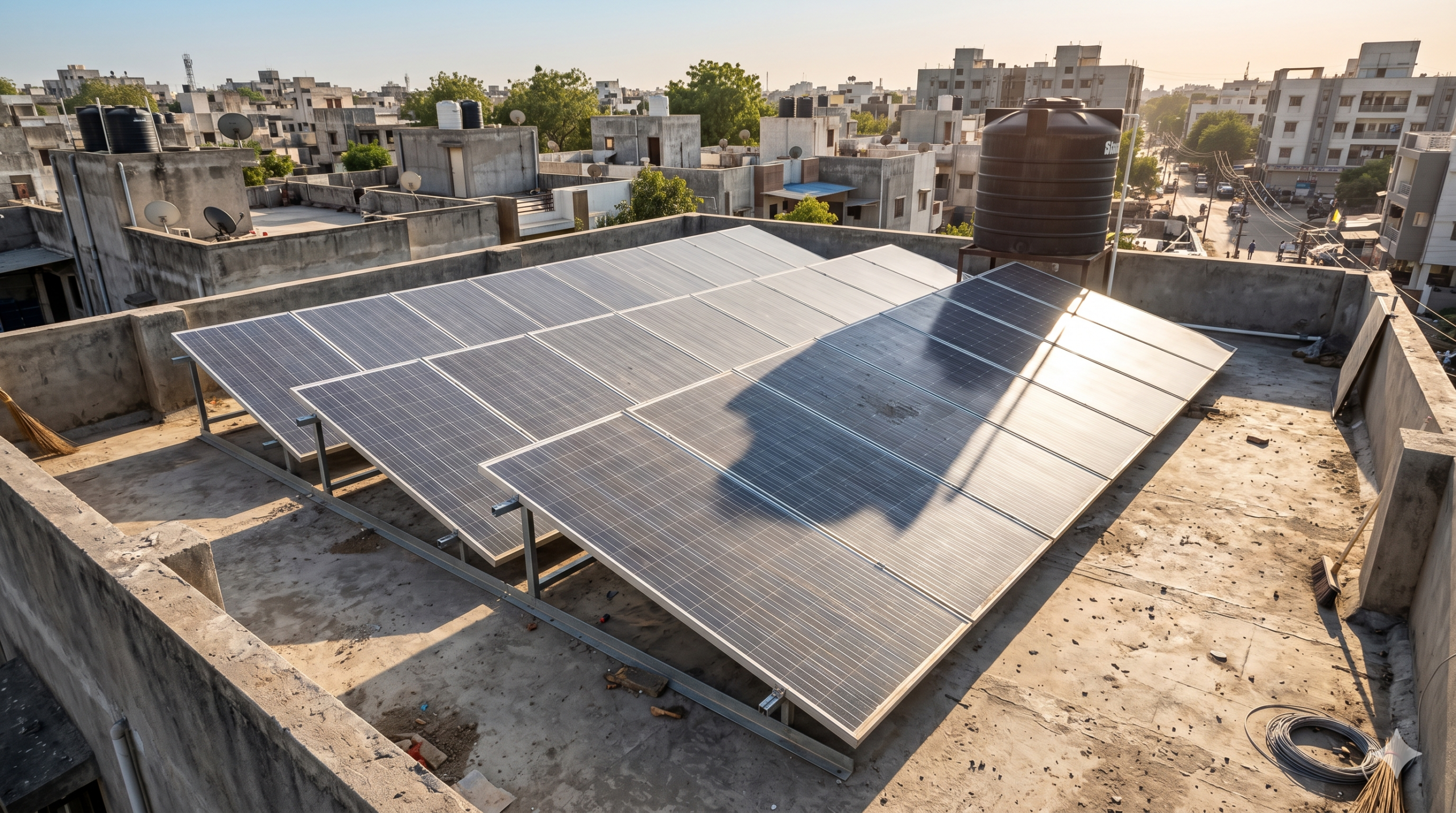
Therefore, proper shadow analysis should always be conducted before installation.
2. Incorrect System Size
Installing a system that is too small may not reduce the electricity bill sufficiently.
On the other hand, installing an oversized system without evaluating actual consumption may not provide the best financial return.
3. Poor Structure Quality
Weak fabrication, rusting structures, poor welding, and inadequate corrosion protection can create long-term safety and maintenance issues.
4. Poor Cable Management
Loose cables, exposed wiring, and poor routing practices can affect both safety and reliability.
5. Improper Civil Work
Poor waterproofing practices and weak foundations can increase the risk of water leakage and future maintenance concerns.
6. Ignoring Monitoring and Maintenance
Regular monitoring helps ensure the solar system continues performing at expected levels.
Without proper monitoring, generation losses may go unnoticed for long periods.
How To Maximize Solar Savings
If your goal is to maximize how much you save with solar, focus on quality from the beginning.
- Choose the correct system size.
- Ensure the rooftop is largely shadow-free.
- Select quality solar panels and inverter technology.
- Invest in strong mounting structures.
- Work with an experienced solar EPC company.
- Monitor system performance regularly.
- Keep solar panels clean.
- Take advantage of eligible subsidy programs.
Most importantly, avoid selecting a solar installation partner based solely on the lowest quotation.
A properly designed system often generates better long-term savings than a cheaper installation with poor workmanship.
About The Author
This article was prepared by the Solar Smart Technical Team and reviewed by experienced rooftop solar consultants with practical installation experience across Gujarat and Maharashtra.
Solar Smart has successfully completed 7000+ rooftop solar installations and assists homeowners with system design, subsidy guidance, net metering, financing options, and long-term solar savings planning.
Frequently Asked Questions
How much can I save with solar?
Most homeowners can save between ₹1,500 and ₹5,000+ per month depending on electricity consumption, solar system size, sunlight availability, and local electricity tariffs.
How Much Can I Save With Solar Using a 5kW System?
A 5kW solar system can help many homeowners save approximately ₹2,500* to ₹4,500* per month depending on electricity usage patterns and local tariff structures.
Does solar work during monsoon?
Yes. Solar panels continue generating electricity during monsoon, although generation may temporarily reduce during heavily overcast conditions.
Is government subsidy available for rooftop solar?
Eligible residential consumers may qualify for subsidy under applicable government schemes such as PM Surya Ghar, subject to current guidelines and eligibility requirements.
Can solar completely eliminate my electricity bill?
Solar can significantly reduce electricity expenses. However, fixed charges and utility-related charges may still apply depending on local DISCOM policies.
How long do solar panels last?
Most quality solar panels are designed for long-term operation and can continue performing effectively for 25 years or more.
How do I know the right solar system size for my home?
The best way to determine the correct system size is through a professional site assessment that considers electricity bills, rooftop space, and future consumption requirements.
How Much Can I Save With Solar? Final Thoughts
The answer depends on your electricity bill, rooftop conditions, system size, and energy consumption patterns.
Nevertheless, rooftop solar remains one of the most effective ways for homeowners to reduce electricity expenses and create long-term financial savings.
Instead of guessing your potential savings, get a professional solar assessment based on your actual electricity consumption.
Book Your Free Solar Site Visit Today
Be Smart. Choose Solar Smart.