Solar Smart
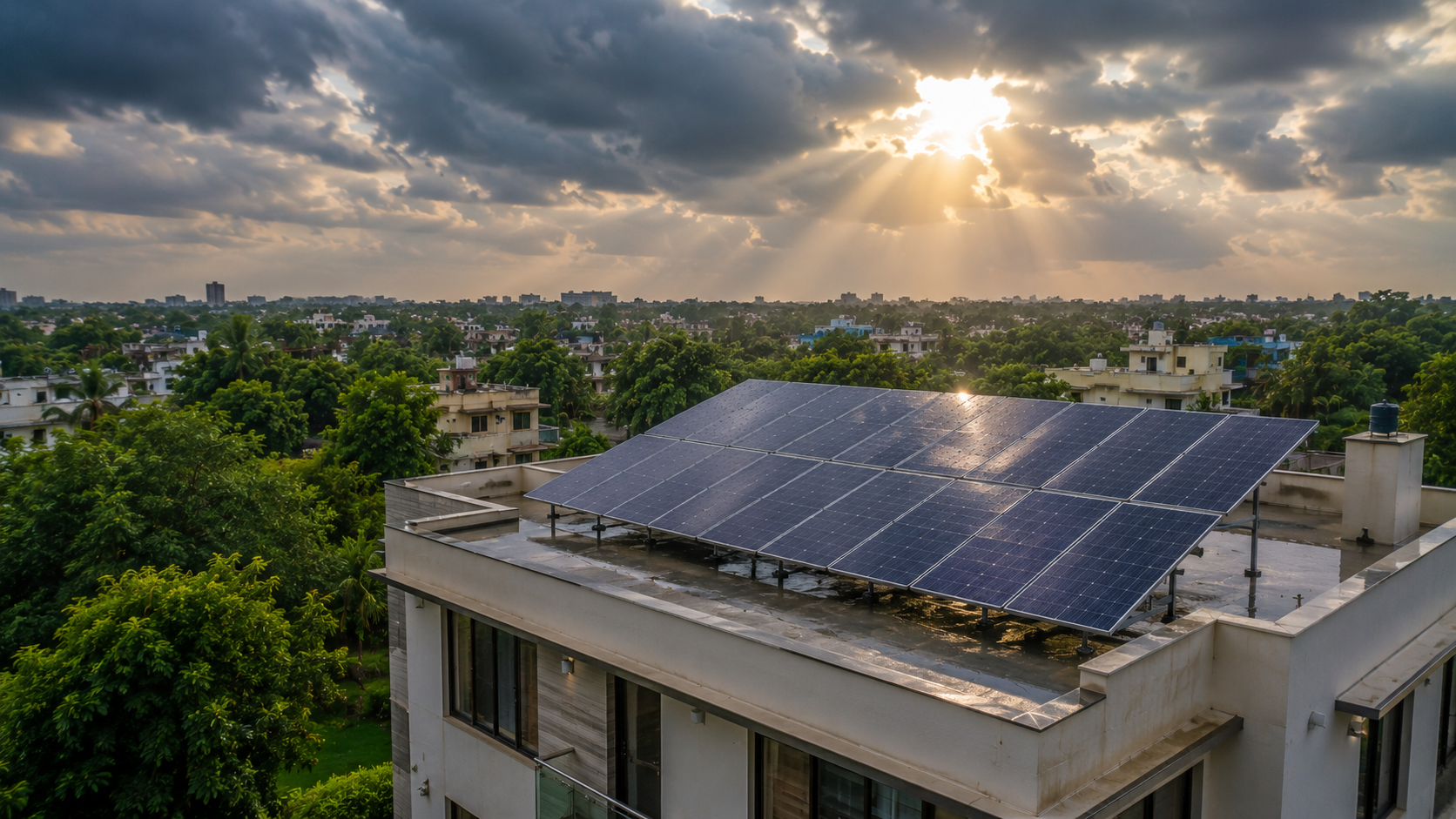
Yes, solar panels work during the monsoon. Modern solar panels continue generating electricity from diffused sunlight even on cloudy and rainy days. During heavy rainfall, output may temporarily reduce to around 10%–50% of its peak generation, but the system does not stop working.
Many homeowners still worry that cloudy skies mean their solar system will stop producing electricity. Fortunately, modern rooftop solar systems are designed to generate power throughout the year, including the rainy season.
| Weather Condition | Typical Solar Generation* |
|---|---|
| Sunny Day | 90% – 100% |
| Light Cloud | 70% – 90% |
| Heavy Cloud | 40% – 70% |
| Heavy Rain | 10% – 50% |
*These are indicative ranges based on typical weather conditions. Actual generation depends on system size, location, cloud cover, panel orientation, shading, and installation quality.
While generation is lower during heavy rain, the reduction is temporary. Solar systems are designed based on annual energy production, not the output of a single day.
For homeowners in Ahmedabad, Nagpur, Pune, Surat, Vadodara, Rajkot, Nashik, Amravati, Wardha and nearby cities, rooftop solar is still a smart long-term investment. Solar savings should be seen over the full year, not just one cloudy week or one rainy month.
In this blog, we will explain how solar panels perform during monsoon, what happens on cloudy days, whether rain damages solar panels, and why Gujarat and Maharashtra are still excellent locations for rooftop solar.
Do Solar Panels Generate Electricity During Monsoon?
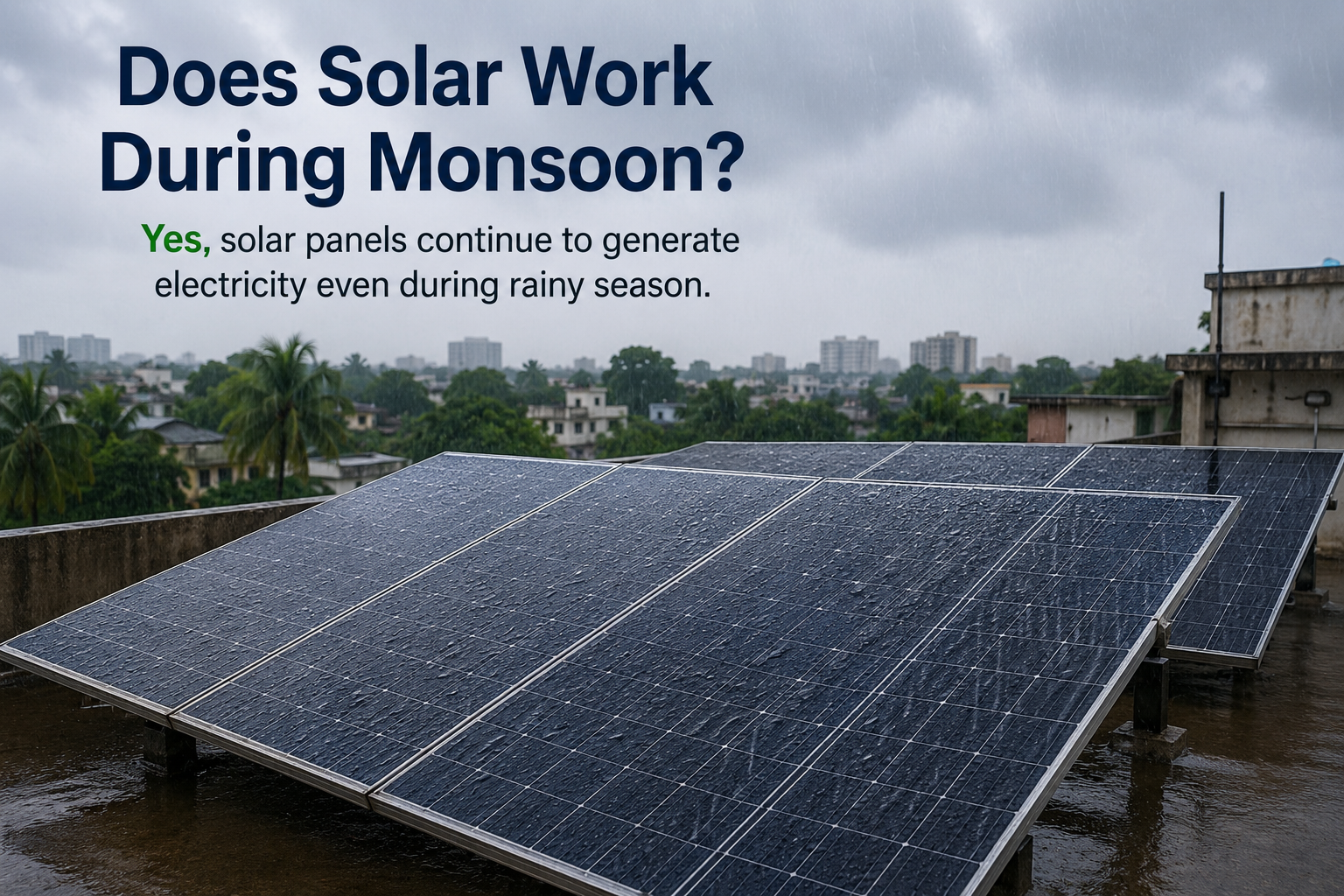
Yes, solar panels generate electricity during monsoon. Solar panels need sunlight, not heat. Even when the sky is cloudy, diffused sunlight still reaches the panels. This diffused sunlight helps solar panels produce electricity.
However, generation will not be the same as a bright summer afternoon. On heavily cloudy or rainy days, solar generation can reduce. On lightly cloudy days, your rooftop solar system can still produce a useful amount of electricity.
This is why professional solar companies calculate solar generation based on yearly production, not one single day. A rooftop solar system is expected to work for 25+ years. A few lower-generation days during monsoon do not decide the overall value of your solar investment.
Solar Panels Need Sunlight, Not Heat
One of the biggest myths about solar energy is that panels need hot weather to work. This is not true. Solar panels work using sunlight. Heat is not the main requirement.
In fact, very high temperatures can slightly reduce solar panel efficiency. A bright but cooler day can sometimes be better for solar performance than an extremely hot day.
During monsoon, sunlight is reduced because of clouds and rain. So generation may come down temporarily. But whenever sunlight is available, even in diffused form, solar panels continue to generate electricity.
Solar generation during monsoon depends on sunlight availability, cloud cover, rainfall intensity, panel cleanliness, and system design. The infographic below explains how solar panels continue working during rainy weather and why generation should be judged by annual performance, not one cloudy day.
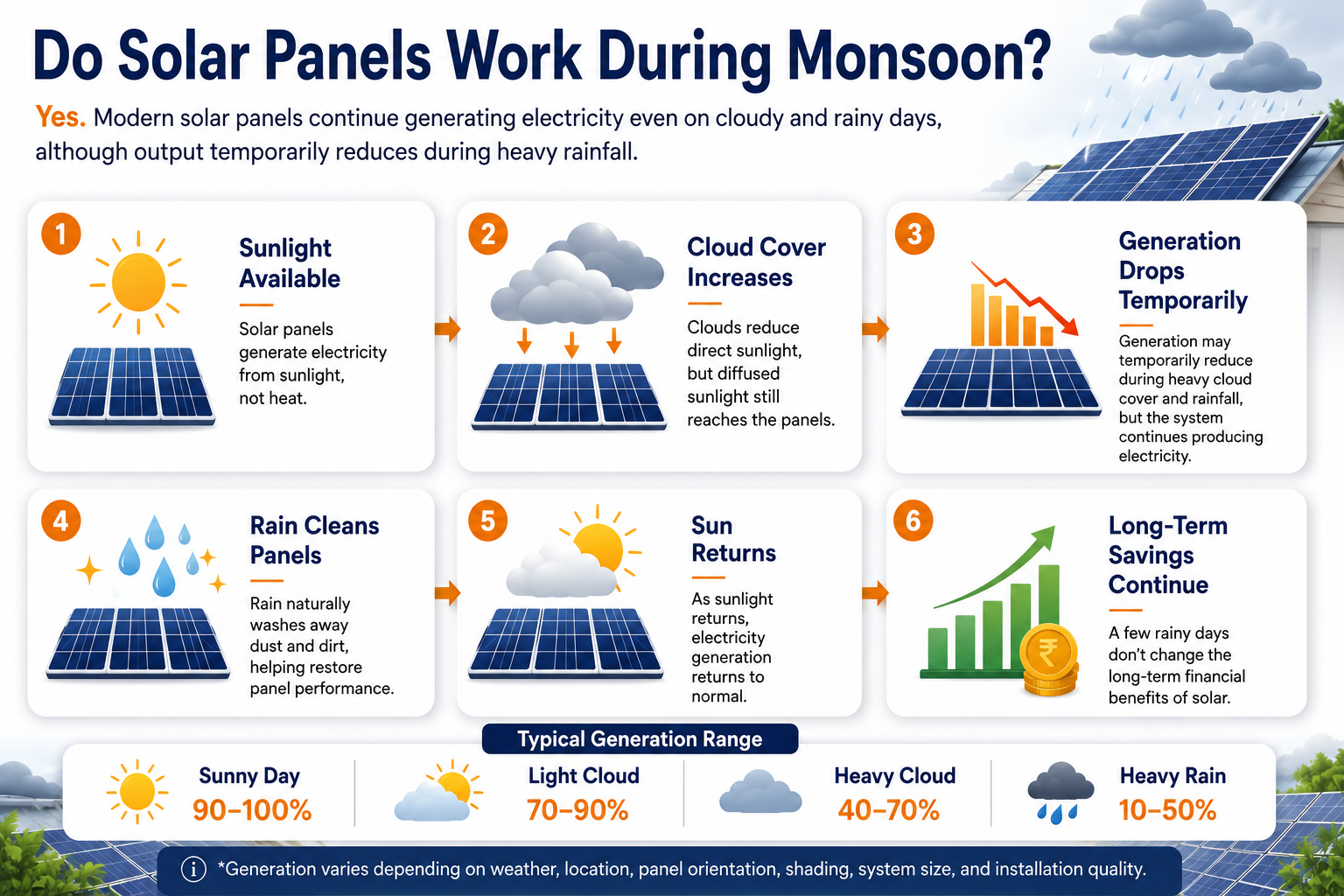
This is why a well-designed rooftop solar system is evaluated based on yearly generation. A few rainy days may reduce temporary output, but they do not remove the long-term electricity savings from solar.
Can Solar Panels Sometimes Generate More Power After Rain?
Yes, under certain weather conditions, solar panels may briefly produce higher electricity output after rain. This phenomenon is known as the Edge-of-Cloud Effect.
When thick clouds begin to clear, sunlight can become temporarily more intense around the edges of the clouds. Combined with the cooler temperatures after rainfall, solar panels may operate more efficiently for a short period and generate slightly higher output than expected.
This increase is temporary and depends on local weather conditions. However, it demonstrates that solar panel performance during monsoon is not always reduced. As weather changes throughout the day, electricity generation also changes accordingly.
What Happens on Cloudy Days?
On cloudy days, solar panels still work, but output depends on how thick the cloud cover is. If the sky is lightly cloudy, the system may still generate a good amount of power. If the sky is dark with heavy rain clouds, generation may reduce significantly for that period.
This is normal and expected. Solar systems are designed with seasonal variation in mind. Just like electricity usage changes from summer to winter, solar generation also changes from season to season.
What matters most is the total annual generation of your system. In states like Gujarat and Maharashtra, strong sunlight for most of the year helps balance the lower generation during monsoon months.
Does Rain Damage Solar Panels?
No, rain does not damage good quality solar panels. Solar panels are built for outdoor conditions. They are designed to handle sunlight, rain, wind, dust and changing weather.
A properly installed rooftop solar system includes strong mounting structure, safe wiring, earthing, lightning protection and proper waterproofing practices. That is why choosing the right installer is very important.
If solar panels are installed correctly, normal monsoon rain is not a problem. In fact, rain can sometimes help clean the panels naturally by removing dust and dirt from the surface.
Rain Can Actually Help Clean Solar Panels
During dry months, dust, pollution and bird droppings can collect on solar panels. This can reduce generation. Monsoon rain naturally washes away some of this dust and dirt.
After rain clears and sunlight returns, cleaner panels may perform better than before. However, this does not mean you should completely avoid panel cleaning. Periodic inspection and cleaning are still useful, especially if there is sticky dirt, leaves or nearby construction dust.
Does Solar Work During Monsoon in Gujarat?
Gujarat is one of the strongest solar states in India. Cities like Ahmedabad, Gandhinagar, Vadodara, Surat, Rajkot and Bhavnagar receive good sunlight for most of the year.
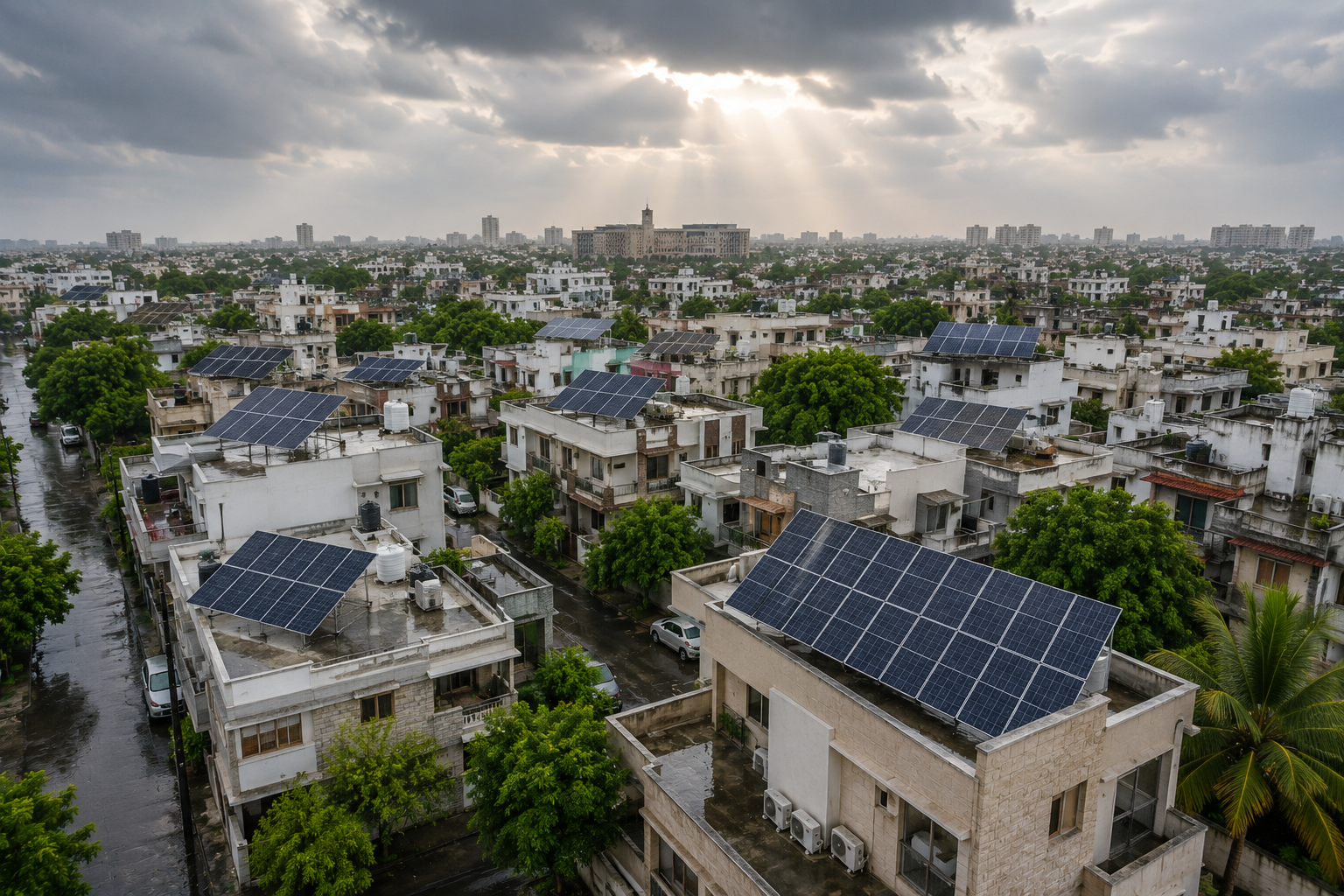
During monsoon, rooftop solar generation may reduce in Gujarat, especially during July and August. But after monsoon, generation improves again. The high sunlight availability during the rest of the year helps balance the seasonal drop.
If you are planning rooftop solar installation in Gujarat, monsoon should not stop your decision. It can actually be a good time to complete your site visit, subsidy guidance and installation planning.
Homeowners in Ahmedabad can also explore our dedicated page for solar company in Ahmedabad to understand Solar Smart’s rooftop solar solutions for homes and societies.
Does Solar Work During Monsoon in Maharashtra?
Maharashtra also has strong potential for rooftop solar. Cities like Nagpur, Pune, Nashik, Amravati and Wardha receive good sunlight for a large part of the year.
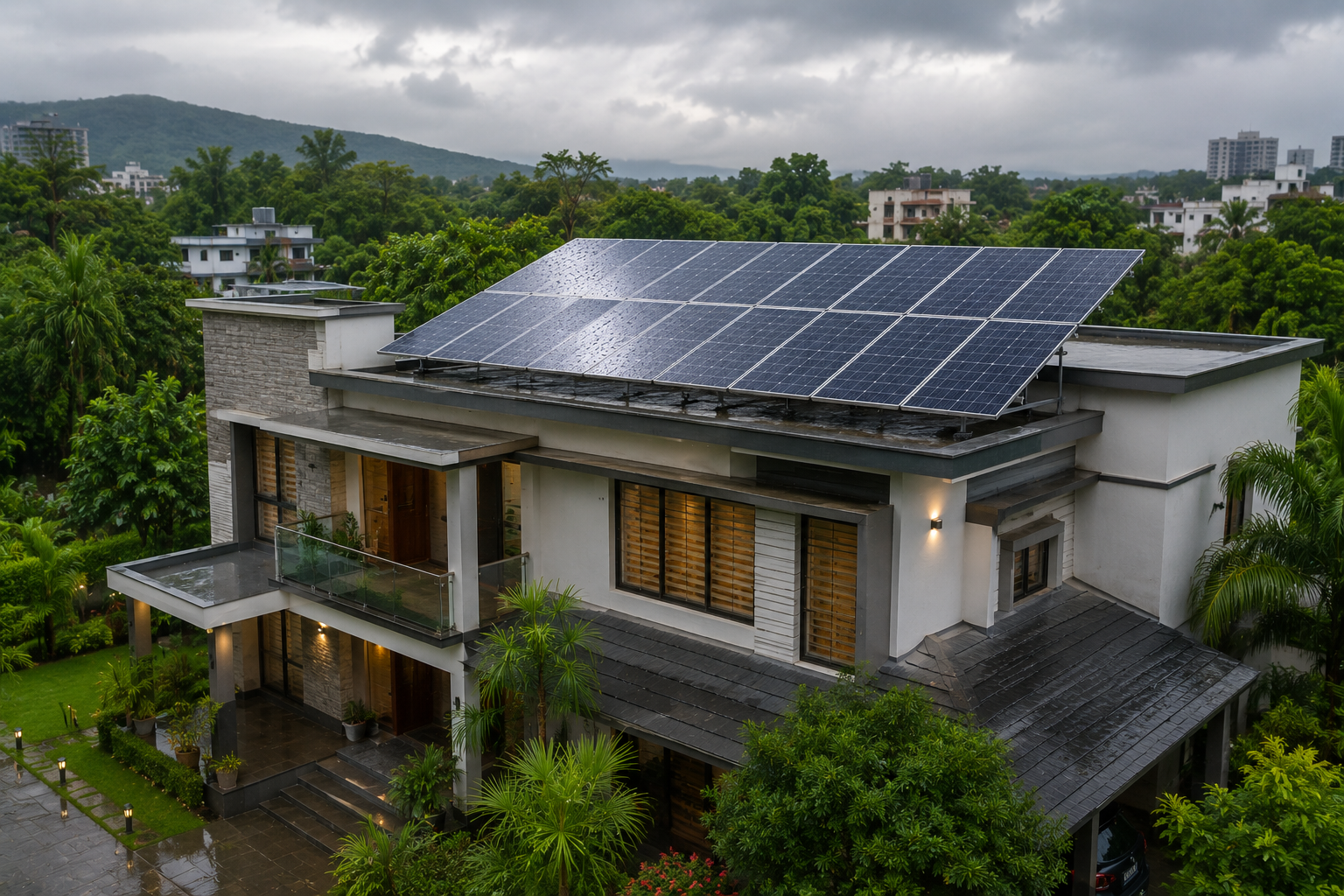
Nagpur, in particular, is a strong market for residential rooftop solar because many homes have suitable rooftop space and high electricity consumption. Even if generation reduces during monsoon, the annual savings can still be very attractive.
For homeowners looking for solar company in Nagpur or solar company in Maharashtra, the right system design matters more than worrying about one rainy season.
Should You Install Solar During Monsoon?
Yes, you can start your solar journey during monsoon. Many homeowners wait for summer because they think that is the only ideal time for solar. But waiting often means another month of electricity bills.
The better approach is to start early. During monsoon, you can complete your consultation, site survey, system design, documentation and subsidy process. Once installation is completed, your system starts giving benefits for the coming months and years.
Every month of delay means one more electricity bill. If your monthly electricity bill is high, waiting can cost more than you realize.
How Net Metering Helps During Seasonal Changes
Net metering helps balance solar generation and electricity consumption. When your solar system generates more electricity than your home uses, excess units can be exported to the grid as per applicable DISCOM rules.
During lower generation months, these credits can help balance your electricity usage depending on your billing cycle and local regulations. This is why solar savings should be calculated on an annual basis.
Net metering rules and processes can differ by state and DISCOM. Solar Smart helps customers understand the process based on their location and electricity provider.
What About Government Subsidy During Monsoon?
Residential rooftop solar customers may be eligible for central government subsidy under the PM Surya Ghar: Muft Bijli Yojana, subject to government rules and eligibility criteria.
You can check official details on the PM Surya Ghar official portal and the Ministry of New and Renewable Energy website.
Since subsidy rules, DISCOM processes and documentation requirements may change from time to time, it is always better to get updated guidance before making a decision.
Common Myths About Solar During Monsoon
Myth 1: Solar panels stop working in rain
This is false. Solar panels continue to generate electricity whenever sunlight is available. Generation may reduce, but it does not become zero unless there is almost no sunlight reaching the panels.
Myth 2: Solar is useful only in summer
Solar works throughout the year. Summer may provide high generation, but solar savings are calculated over annual production.
Myth 3: Rain damages solar panels
Good quality panels are made for outdoor weather. Proper installation is the key. Rain is not a problem for a professionally installed rooftop solar system.
Myth 4: Monsoon is the wrong time to install solar
Monsoon can be a good time to plan solar. You can complete your site visit, quotation, documentation and subsidy guidance instead of waiting and paying more electricity bills.
Myth 5: Solar savings stop during monsoon
Savings may reduce during lower generation days, but the system continues to work. The annual savings remain the main factor.
How to Maintain Solar Panels During Monsoon
Solar systems do not need heavy maintenance, but simple care helps maintain performance.
- Check that leaves or dirt are not blocking the panels.
- Make sure there is no new shadow from nearby trees or structures.
- Keep an eye on inverter readings.
- Do not climb on a wet roof without safety equipment.
- Contact a professional if generation drops unusually.
- Schedule inspection if you notice loose wires, water leakage or physical damage.
A safe installation and periodic checks can help your rooftop solar system perform well for years.
Why Annual Solar Generation Matters More Than Daily Generation
Many homeowners look at one cloudy day and worry that solar is not working. This is the wrong way to judge a system.
Solar generation naturally changes by day, season and weather. A sunny day produces more electricity. A rainy day produces less. But the system’s financial value comes from yearly generation and long-term savings.
A rooftop solar system is not a one-month product. It is a 25+ year asset for your home. A short monsoon period does not cancel the long-term benefit.
Who Should Consider Solar Before or During Monsoon?
You should seriously consider rooftop solar if:
- Your monthly electricity bill is above ₹2,000 to ₹3,000.
- You own your home or have roof rights.
- Your roof gets good sunlight for most of the day.
- You want long-term electricity bill savings.
- You are planning to use AC, appliances or electric vehicles more in future.
- You want to use government subsidy benefits if eligible.
If you are unsure about your roof, system size or savings, the best first step is a professional solar site visit.
How Solar Smart Helps Homeowners
Based on our experience installing rooftop solar systems across Gujarat and Maharashtra, we see reduced generation on heavily overcast days, but systems continue producing electricity throughout the monsoon.
Our team helps you understand:
- How much solar capacity is suitable for your home
- Expected generation and savings
- Roof space requirement
- Subsidy eligibility
- Loan and EMI options
- Installation process and timeline
You can also explore related guides like best solar panel technology for home and on-grid vs off-grid solar system to understand which system type is right for your home.
Final Answer: Does Solar Work During Monsoon?
Yes, solar works during monsoon. Solar panels continue to generate electricity using available sunlight, even when the weather is cloudy. Generation may reduce during heavy rain, but the system does not stop working permanently.
For homeowners in Gujarat and Maharashtra, monsoon should not be a reason to delay solar. The bigger question is not whether solar works in rain. The bigger question is how much more electricity bill you will pay by waiting.
A few rainy days don’t decide the value of solar. Twenty-five years of clean energy and lower electricity bills do.
If you are planning rooftop solar for your home, this is the right time to understand your savings, subsidy eligibility and system size.
Book a Free Solar Site Visit
Want to know how your home will perform during the monsoon?
Book a Free Solar Performance Assessment and we’ll estimate annual generation, expected savings, and the right system size for your roof.
Book your free solar site visit today and take the first step toward long-term electricity bill savings.
Solar Smart Technical Note: A properly designed rooftop solar system is always sized using annual generation estimates, not the output of a single cloudy day.
Be Smart. Choose Solar Smart. ☀️